Passive Release Techniques™
Passive Release Techniques™ is the primary hands-on movement restoration system within Dynamic Release Techniques™. PRT™ is built around precise provider-guided movement, controlled tissue tension, and restoration of tissue glide.
A progressive path to
clinical mastery.
Dynamic Release Techniques™ follows a progressive educational pathway. Each course builds on the last.
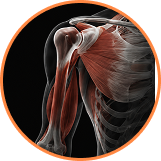
UPPER EXTREMITY
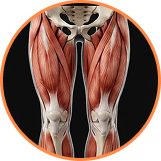
LOWER EXTREMITY
32 CE hours (16 online with Dr. Robert C. Gordon, DC, AAMUAP + 16 in
person), pending approval
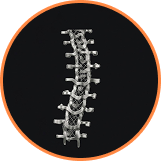
SPINE & JAW
32 CE hours (16 online with Dr. Robert C. Gordon, DC, AAMUAP + 16 in
person), pending approval
NEURO MOBILIZATION
32 CE hours (16 online with Dr. Robert C. Gordon, DC, AAMUAP + 16 in
person), pending approval
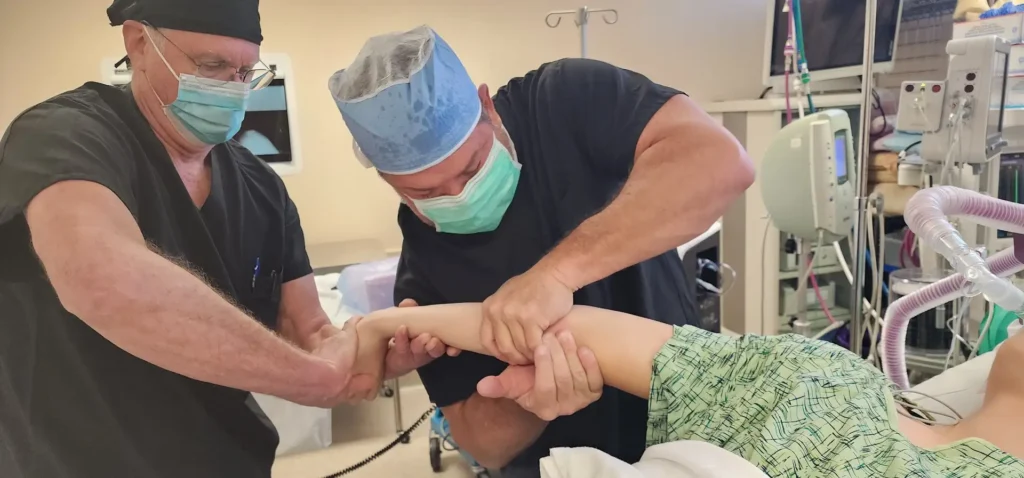
This allows for better precision, less guarding, and a more controlled approach to restoring soft tissue mobility.
The Provider in Control.
Unlike active therapies where the patient creates the movement, Passive Release Techniques™ places the provider in control.
- Positioning the body
- Guiding the movement
- Adjusting release in real-time
- Applying specific tissue tension
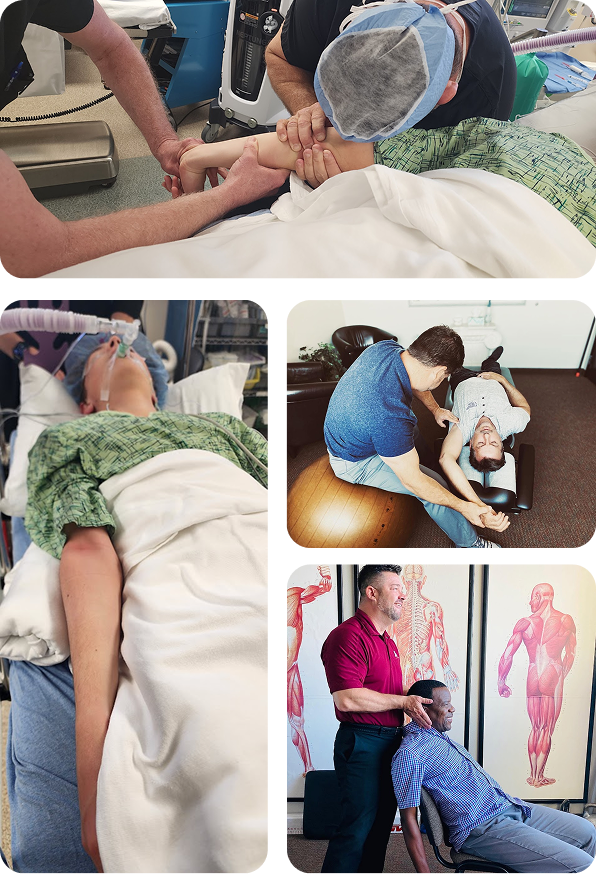
Why Passive Release Techniques™ (PRT™)
Physician-Controlled Precision
Every movement is directed by the physician, and their assistant allowing precise localization and treatment of soft tissue restrictions while restoring normal
Passive Patient Positioning
Patients remain relaxed or unconscious throughout treatment, minimizing protective muscle guarding, improving treatment, and allowing more effective soft tissue mobilization.
Restoration of Tissue Mobility
PRT is designed to restore fascial glide, reduce the adhesions in the muscles, tendon, ligaments, improve tissue flexibility, enhance joint mobility, and optimize normal biomechanical movement.
Adaptable Across Clinical Settings
The physician-directed principles of PRT make it effective for awake patients and adaptable to procedures performed under anesthesia, where movement is guided entirely by the physician or clinical team.
Functional Performance & Recovery
By improving tissue mobility and movement quality, PRT helps reduce pain, enhance performance, accelerate recovery, and support long-term musculoskeletal health.
Clinical Applications
PRT™ is applied across three major regional areas. Each area is treated with precise tension, guided movement, and provider-controlled sequencing.
Upper Extremity
Focuses on the shoulder, scapula, arm, elbow, forearm, wrist, and hand. Treatment may address rotator cuff restrictions, pectoral tightness, scapular mechanics, biceps and triceps relationships, forearm tension, wrist mobility, grip function, and overhead movement.
GOAL
Improve shoulder motion, arm function, grip strength, and upper-body mechanics.
Lower Extremity
GOAL
Improve gait, balance, loading, force transfer, and athletic movement.
Spine and Jaw
GOAL
Restore the central mechanical axis of the body.
Neuro Mobilization
Focuses on the cervical spine, thoracic spine, lumbar spine, ribs, pelvis, sacrum, diaphragm, and TMJ. This section addresses spinal motion, postural balance, breathing mechanics, rib motion, pelvic control, and jaw-related tension patterns.
GOAL
Restore the central mechanical axis of the body.
Restoring Tissue Glide
PRT™ addresses the mechanical relationship between fascia, muscle, tendon, ligament, capsule, scar tissue, and regional nerve interfaces. It is not a nerve-only system. It is a full soft tissue and movement restoration method.
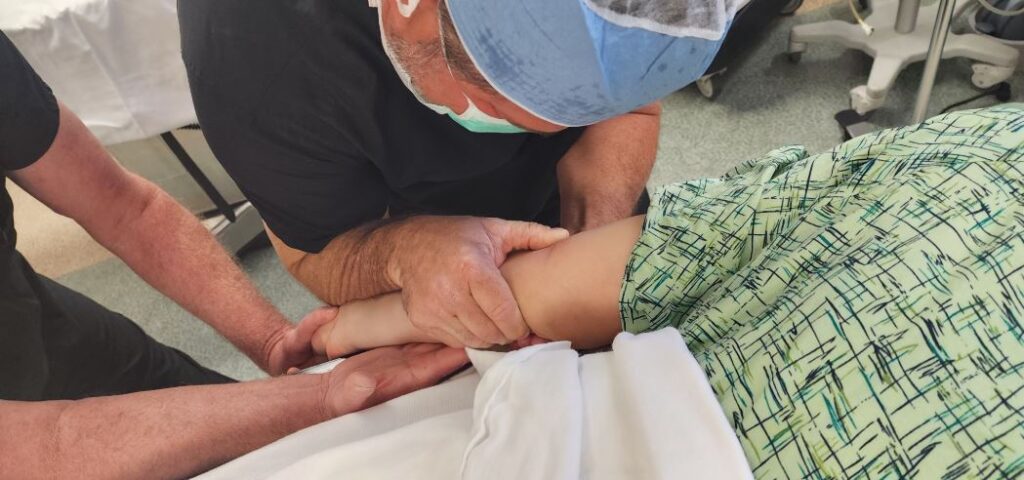
When tissues lose glide, the body begins to
compensate.
Motion becomes restricted, joints absorb abnormal stress, fascia tightens, and the nervous system may become irritated. Passive Release Techniques™ is designed to restore motion through controlled, guided movement.
How PRT™ Fits Into DRT™
PRT™ is the hands-on foundation of Dynamic Release Techniques™. It builds directly from NOR™ and prepares providers for more advanced Dynamic Instruments™ and STOMUA™ applications.
Passive Release Techniques™ restores motion by combining precise contact, controlled tension, and provider-guided movement.